
As with many veterans, the end of service does not always mean the end of its impact; some effects linger quietly, slowly shaping daily life in ways that are easy to overlook from the outside. Hearing loss is one of them. It creeps in slowly; it rarely arrives all at once. Instead, it builds over years of exposure, repeated noise, and moments where protection was limited or simply unavailable.
This story is of Mr Oliver St John. This journey has been long, gradual, and deeply tied to his time in the Army.
Service, noise, and the cost of duty
During his military career, Mr St John was exposed to repeated high-level noise through operational and training environments. This included exposure to large guns during Operation Telic, proximity to thunder flashes and flash bangs in buildings, and frequent weapons firing on ranges, often involving multiple weapons at once and without adequate hearing protection.
At the time, the focus was always on the task at hand. Similar to how many serving personnel, hearing protection was not always prioritised or practical in fast-moving or high pressure situation. The consequences of this exposure, however, became super clear over time.
Now, years later, Mr St John began experiencing persistent hearing difficulties and tinnitus, a constant internal noise that he describes as really annoying. The tinnitus became something he had to manage daily, often relying on background music or television just to distract himself from it.
Living with hearing loss beyond service
Hearing loss does not only affects what you hear, but it also affects every aspect of how you live. For Oliver, everyday situations slowly became more challenging. Conversations in meetings or social settings required extra effort. Voices were harder to separate, especially in group environments. Watching television meant subtitles were essential rather than optional.
These challenges are common among veterans with noise-induced hearing loss, yet they are often endured quietly. Many adapt rather than seeking help, assuming it is something they must live with. But over time, this constant strain can lead to listening fatigue, frustration, and withdrawal from social situations.
Mr St John had engaged with NHS services regarding his hearing, but like many veterans, found that his needs were not fully met by standard pathways alone. This is not a reflection of effort, but of limitation: of how complex hearing loss and tinnitus are and how often they require more tailored solutions and advanced technology to make a meaningful difference.
Accessing the right support
This is where charitable support becomes life-changing. With the help of the UK Veterans Hearing Foundation, Mr St John was able to access specialist private hearing care. Our Foundation exists to ensure that veterans are not left struggling with hearing loss simply because of cost or access barriers, and Oliver’s case reflects exactly why this support matters.
Funding for Mr St John’s hearing care was provided by the Ernest Kleinwort Charitable Trust, whose contribution made it possible for him to receive a solution matched to his individual needs, rather than settling for a compromise. This funding removed a significant barrier, allowing Mr St John to focus on what really mattered, which is improving his quality of life.

Specialist care at Hear-Co, Sussex
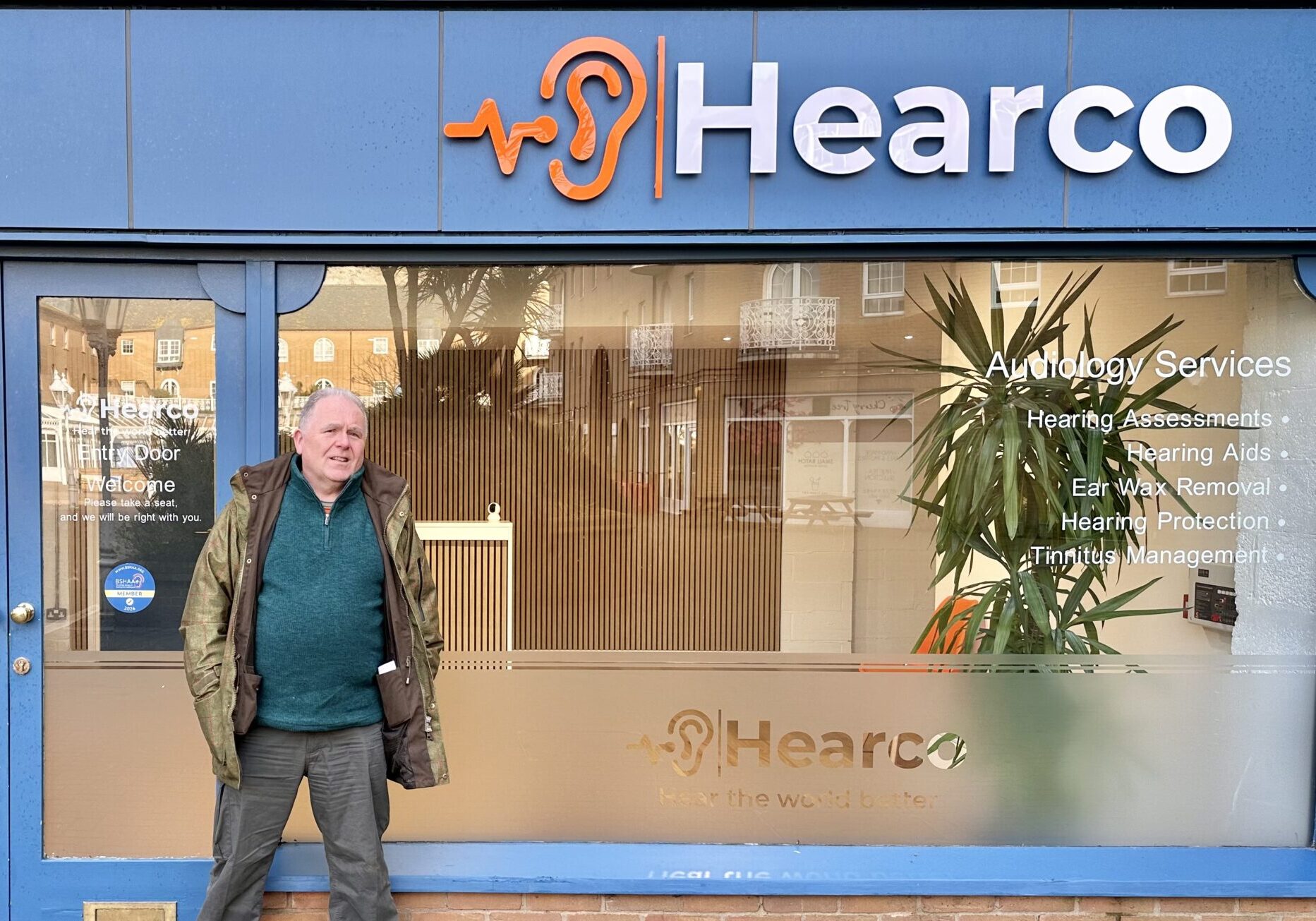
Mr St John’s hearing assessment and fitting were carried out by Hear-Co, a specialist audiology clinic based in Sussex with experience in supporting complex hearing needs. From the very first appointment, the approach was centred around understanding Mr Oliver as a person and not just a hearing test result. His military background, noise exposure history, daily challenges, and tinnitus were all carefully considered as part of the whole assessment process. Rather than offering him a one-size-fits-all approach, the team focused on identifying technology that could genuinely support Oliver’s listening environments, reduce strain, and help manage his tinnitus more effectively.
Mr St John was fitted with Phonak’s top-of-the-range hearing aids, chosen for their advanced sound processing, clarity in challenging listening environments, and ability to support tinnitus management.
For veterans with long-term noise exposure, advanced hearing technology can make a substantial difference. Features such as improved speech understanding in background noise, adaptive sound environments, and connectivity options help restore confidence in everyday situations, from conversations to media use. Importantly, these hearing aids were not simply fitted and sent away. The fitting process involved careful fine-tuning, verification, and adjustment to ensure comfort, clarity, and effectiveness. This level of personalised care is essential for long-term success and acceptance of hearing aids.
More than better hearing
While hearing aids are a technical solution, their impact is deeply human. For Mr St John, this fitting represents more than improved sound. It is about reducing daily effort, easing frustration, and reclaiming moments that had slowly become difficult. It has meant conversations feel less exhausting, television becomes enjoyable again, rather than something to endure, and the constant need to “work harder” to hear is gradually lifted.
For veterans, especially, regaining these aspects of daily life can have a powerful effect on confidence and well-being. Hearing loss often goes hand-in-hand with social withdrawal, but the right support can reverse that pattern.
Why veteran hearing stories matter
Noise-induced hearing loss remains one of the most common long-term effects of military service. Yet many veterans live with it silently, unaware that better options exist or unsure where to turn for help. Mr St John’s story highlights what is possible when clinical expertise, charitable funding, and veteran-focused care come together. It shows the importance of specialist pathways that recognise the unique challenges faced by those who have served.
The collaboration between charitable organisations and experienced audiology clinics ensures that veterans are not left navigating hearing loss alone and that support is delivered with respect, dignity, and understanding.
Looking forward
With his new hearing aids, Oliver is now equipped with technology designed to support him in real-world situations, not just in a quiet test room. While hearing loss cannot be reversed, the right intervention can dramatically change how it is experienced. Stories like Mr St John’s remind us that hearing care is not just about devices; it is about restoring connection, independence, and confidence. It is about ensuring that those who have given so much are not left struggling with something that can be helped.
We are proud to share Mr Oliver St John’s journey and to continue supporting veterans through access to specialist hearing care. With the right support in place, better hearing and a better quality of life are possible.
