
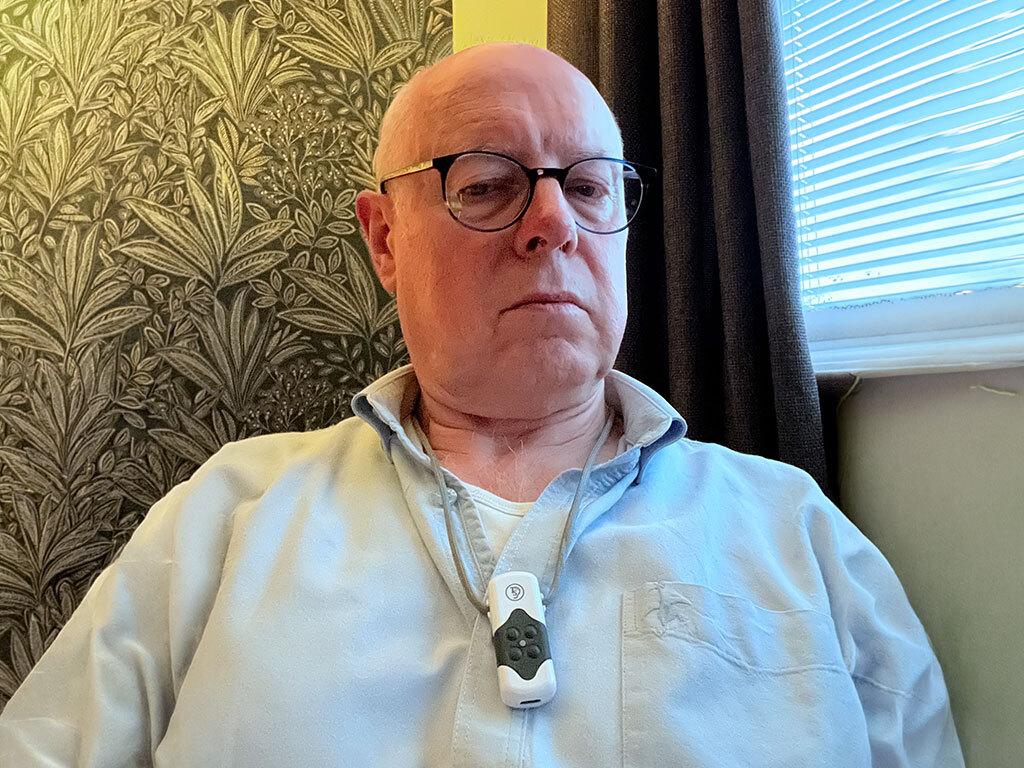
After 40 years of struggling with tinnitus, Mr Terence Watson found new hope with TinniSoothe. He had previously tried to find relief but had found little success, leaving him feeling as though the noise was something he simply had to accept and move on. His experience began to change after he received a TinniSoothe wearable sound therapy device, funded by the UK Veterans Hearing Foundation.
Mr Terence Watson, also known as Tez, became the first veteran supported by the Foundation to receive this form of tinnitus support. Within the first few days of wearing the device, he noticed encouraging differences in his concentration, favourite activities, and sleep.
“I don’t think I realised how much of a distraction tinnitus is,” Mr Watson explained. “After over forty years of living with the condition, this is quite a revelation, as nothing else I’ve tried has worked. I thought I had to just learn to live with it.”
Hidden distraction of tinnitus
Tinnitus often involves hearing sounds with no external source, such as ringing, buzzing, humming or hissing. Every person experience tinnitus differently; for some people, the noise becomes more noticeable in quiet surroundings or while trying to concentrate or sleep. Mr Watson had lived with the condition for over four decades. As time passed, the constant sound had become part of his everyday life, but receiving his TinniSoothe device helped him recognise how much of his attention tinnitus had been taking.
Reading and painting are among the activities he loves; both of these require focus and periods of quiet when tinnitus often feels harder to ignore. Soon after starting to wear TinniSoothe, Mr Watson felt more able to give these activities his full attention again. He says,
“Since wearing the TinniSoothe, I’d say already I’m noticing how I’m far more able to concentrate on things like reading and painting, which I love,”
What is TinniSoothe?
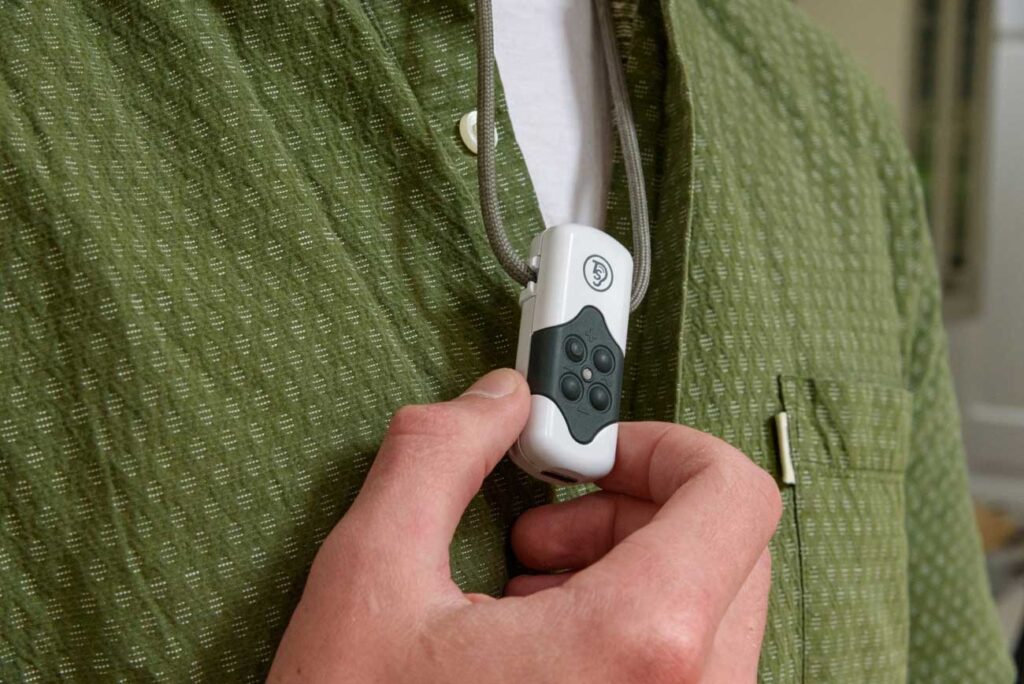
This is a small, British-made wearable device designed for supporting tinnitus management through sound therapy. This device produces gentle, adjustable background sound, giving the wearer another sound to focus on when tinnitus becomes distracting. During the day, the module sits around the neck on a lanyard or clips onto clothing. The speaker directs the selected sound towards the wearer’s ears without requiring earbuds or blocking surrounding sounds.
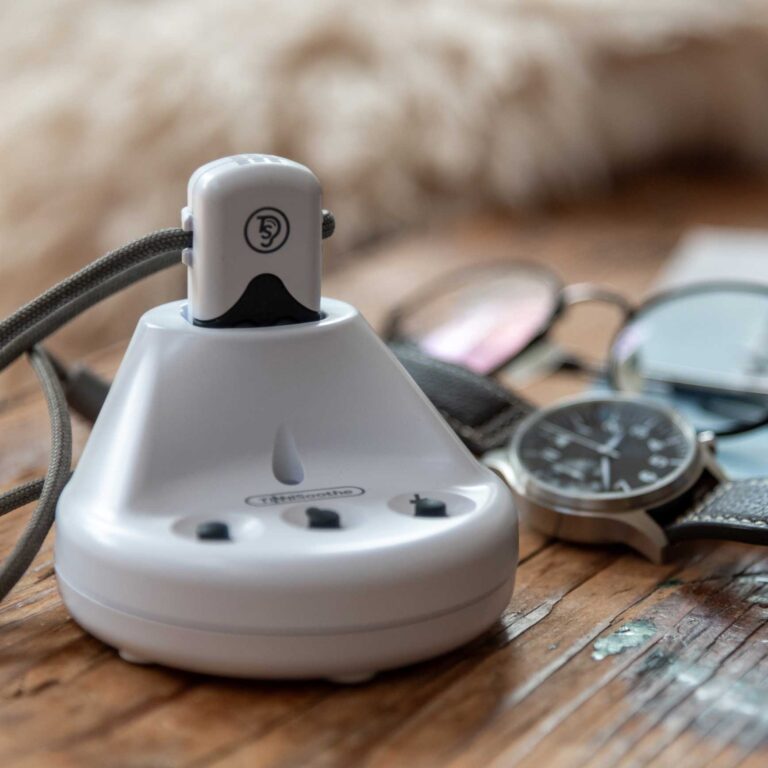
During the night, the module docks in a bedside charging cradle, and the device then switches to the user’s chosen night-time settings while recharging for the following day. No phone, app, Bluetooth or Wi-Fi connection is required. The volume and frequency are adjustable, allowing each user to find settings suited to their own tinnitus experience. TinniSoothe is a registered Class I medical device designed to support tinnitus distraction and habituation; this device is not a cure for tinnitus or hearing loss, and individual experiences differ.

Finding support during quieter moments
Mr Watson found TinniSoothe most helpful during quieter parts of his day. In louder places, such as his workplace or environments with music playing, surrounding sounds already helped draw his attention away from tinnitus. When the environment became quiet, the device provided another gentle sound for his mind to follow.
“It’s when things are very quiet that the TinniSoothe comes into its own by offering me something other than the tinnitus to draw my attention,” he explained.
This reflects the principle behind sound therapy, and adding a low-level external sound reduces the contrast between tinnitus and a quiet environment. Over time, this approach aims to support habituation, in which the brain gradually pays less attention to tinnitus.
Tinnitus UK describes TinniSoothe as an external sound device designed to divert attention from tinnitus. Its independent assessment gives the device a positive safety rating while noting limited current evidence regarding effectiveness. Mr Watson’s results, therefore, represent his personal experience rather than an expected outcome for every user.
Learning what works at night
Mr Watson also tried using the TinniSoothe dock by his bedside; during the first two nights, he felt he slept better and for longer. Then the sound initially disturbed his wife, even at low volume, so Mr Watson muted the nighttime settings while considering whether a quieter level would work for both of them. As they became more familiar with the device, his wife grew accustomed to the background sound.
She described the noise as being, “like someone has just poured you a fizzy drink.”
To which Mr Watson said, “I quite like that”.
His experience throughout this shows how finding the right settings sometimes take time; the volume and frequency preferences differ between users, and anyone sharing a bedroom also needs to feel comfortable with the night-time sound.
Part of his everyday routine
TinniSoothe soon became part of Mr Watson’s daily routine; he docks the module before bed and then wears the device after getting ready each morning. He mostly clips the module outside his clothing; the device has prompted questions from other people, which he feels happy to answer. He also wears the module inside his clothing when the weather looks rainy.
As TinniSoothe is not waterproof, Mr Watson removes the device before showering and protects the module during wet weather. He hopes a future version will offer a more rugged design for people who enjoy outdoor lifestyles. His excitement even led him to volunteer for future product testing.
“If TinniSoothe wants a volunteer to road test version 2.0, please tell them I’m more than willing!” he said.
A positive first step for Mr Watson
Mr Watson remains in the early stages of using TinniSoothe, but his experience so far has been encouraging. After decades of living with tinnitus and finding no previous approach helpful, he now has another way to manage the moments when the noise demands his attention.
“I’m delighted to have something to alleviate the sounds I’ve lived with for so long,” he says.
He also expressed his gratitude for the financial support behind his device.
“Thanks so much for the funding of this device. I think it’s going to prove helpful. I’ll contact you again in a few weeks and let you know how I’m doing, but if the past few days are anything to go by, it’ll be more of the same. I hardly believe it.”
Thanks to the Veterans’ Foundation
A special thank you to the Veterans’ Foundation for supporting Mr Watson’s journey; their generous funding helped provide his TinniSoothe device, giving him a new way to manage the tinnitus he has lived with for more than 40 years. We are grateful for their continued support in helping veterans access the hearing and tinnitus care they need.

Expanding tinnitus support for veterans
Mr Watson’s journey marks an important step for the UK Veterans Hearing Foundation as we continue widening the support available to former Armed Forces personnel living with tinnitus.
Tinnitus affects people in different ways; one person might struggle most with sleep, while another finds concentration, work or quiet moments more difficult. Suitable support, therefore, depends on the individual and might include sound therapy, hearing aids, tinnitus counselling, wellbeing support, or further clinical guidance.
TinniSoothe offers one option within this wider approach. Mr Watson’s early experience shows how a simple daily routine and access to suitable support have helped him focus more on the activities he enjoys and less on the sound he has lived with for over 40 years.
