
At a group event, Mr Edward Anderson found one of the simplest parts of being there difficult. He struggled to follow what people were saying in a noisy room; picking out a conversation took effort, and joining in was harder after he had already missed part of what was said. At home, his hearing loss showed up in different ways. Mr Anderson found the television difficult to follow and had trouble hearing his spouse. He was already wearing hearing aids, but those were still the first thing he thought of when we asked how hearing loss affected him.
Mr Anderson shared those examples in his application to the UK Veterans Hearing Foundation (UKVHF). He told us about his time in the Army, the conversations he struggled to follow and a practical problem with his hearing aids. Through UKVHF, he went on to receive a pair of Oticon hearing aids.
Mr Anderson’s service in the Royal Army Ordnance Corps
He served in the British Army with the Royal Army Ordnance Corps, including an operational tour in Brunei. When asked about his hearing during his military service, he described a gradual change. He linked the deterioration to firing small arms while serving. After so many years, when Mr Anderson wrote about his hearing for his application, most of his examples came from ordinary life. He mentioned communicating with his partner, listening to the telly and participating in group events. Each example gave us a clearer picture of what he wanted help with.
The group event stood out because Mr Anderson described two related difficulties. He struggled to pick up conversations in busy surroundings, and found taking part in group events even harder. In a conversation, listening and taking part happen together. When someone misses what another person has said, they also miss the moment to ask a question, add a comment or respond to a joke. Mr Anderson’s examples showed why background noise mattered to him in many places where conversation was part of being there.
How hearing loss affected life at home
The examples Mr Anderson gave from home were familiar ones; he wanted to follow the telly and hear his spouse in conversation. Both were part of his daily life, and both still took effort with the hearing aids he was wearing.
When it is a conversation at home, it brings different demands from the one at a group event. With the television, following what is said is often part of the story. With a partner, hearing what is said matters for all the small exchanges people have throughout the day. Mr Anderson included both when describing his hearing loss, alongside the difficulty he faced in noisier settings. Details like these give us a more personal picture than a description of hearing loss on its own. For Mr Anderson, the question was how his hearing affected the things he did and the people he spoke to. The telly, conversations at home and group events gave him three straightforward ways to explain what was happening.
Changing a hearing aid battery is difficult
Mr Anderson also told us about the problem he faced with the hearing aids themselves. He is registered blind and found changing the small batteries difficult. A battery change is easy to overlook when talking about hearing support; much of the conversation naturally centres on speech and background noise. Mr Anderson’s application brought attention to what happens before the hearing aids go in. Changing a battery is part of keeping a device ready to use, and the size of the battery made this everyday task difficult for him.
He wanted to follow speech in the places where he spent time, and he needed hearing aids he felt able to manage day to day; both mattered to Mr Anderson, and both had a place in his application.
Mr Anderson receives new Oticon hearing aids
When Mr Anderson first got in touch with the UK Veterans Hearing Foundation, he told us how hard he found following conversations in noisy rooms and changing the small batteries in his hearing aids. These everyday difficulties were what led him to ask for support.
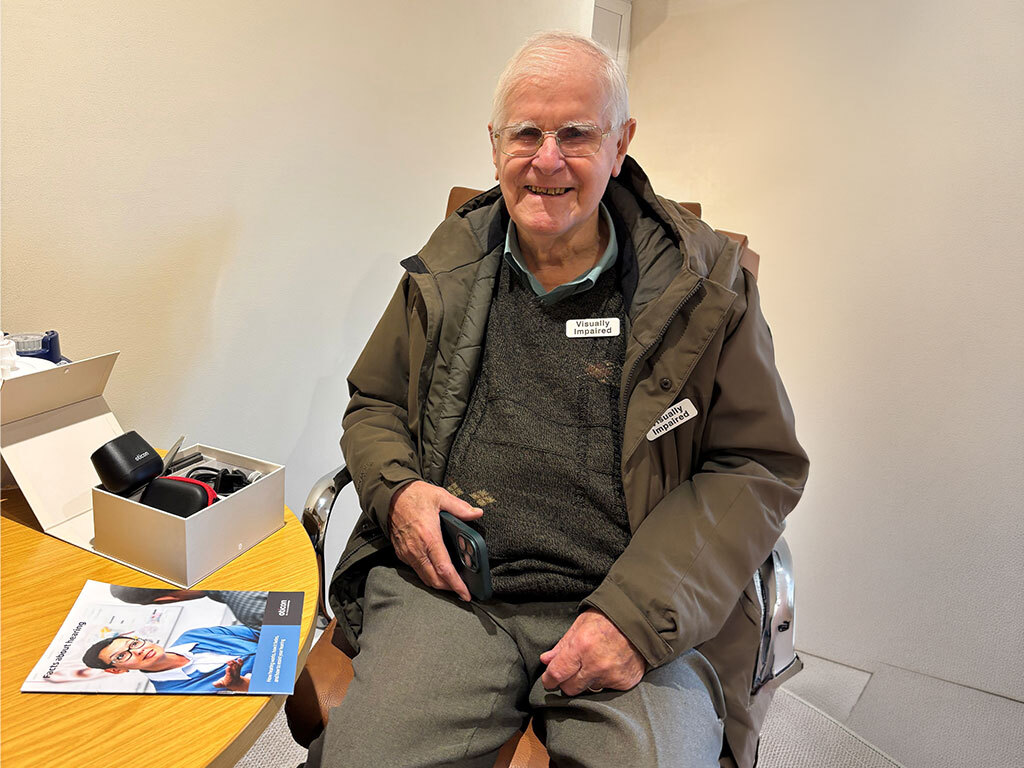
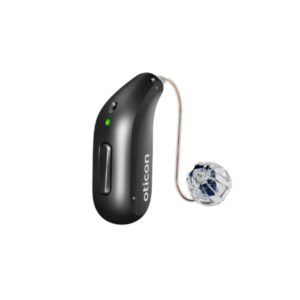
Mr Anderson went on to receive a new pair of Oticon hearing aids. In the photograph, he’s smiling beside the open box, with his new hearing aid equipment on the table.
Thank you, Mr Anderson, for sharing your story and putting into words some of the difficulties other veterans and their families might recognise. We’d also like to thank Reeds Hearing Care for fitting Edward’s new hearing aids and the Walter Guinness Charitable Trust for funding them.