
When Army veteran Mr Pieper applied to the UK Veterans Hearing Foundation (UKVHF), he explained how hearing loss had affected the kind of work he wanted to do. He had hoped to work in an industry where working on site and at height was part of the job. But his hearing difficulties limited those options, and the impact was something he dealt with every day. When we asked him where his hearing difficulties began, Mr Pieper pointed to his time in Iraq. Now, years later, his application told us both about his military service and the effect hearing loss was having on his life after the Army.
Transition between Army service and civilian life
How hearing loss affected the work he wanted to do
When you have an industry in mind you want to work in, you might spend time thinking about which roles to apply for, what training you need and where you want to build experience. There was another consideration for Mr Pieper. Some of the work he hoped to do involved being on site or working at height, and he told us his hearing difficulties prevented him from doing both.
That detail matters because the impact of hearing loss looks different for each person. You can ask someone how their hearing affects them, and they might talk about following a conversation over dinner or hearing someone on the phone. Mr Pieper chose his working life as his example; he wanted to work in a particular industry and felt unable to take on duties he associated with that work.
His experience also shows why a question about everyday life belongs in a hearing support application. When someone tells us they have difficulty hearing, we learn something about their hearing, and when they describe a job they wanted to do or a situation, they now find difficult, we learn what those difficulties mean for them. In Mr Pieper’s case, that mean understanding how hearing loss affected his choices that he faced after leaving the Army.
Taking the step towards hearing support
At the start of his application, Mr Pieper said he was waiting for NHS hearing aids. He contacted the UKVHF and shared his service background when he first experienced hearing loss and how his hearing was affecting his day-to-day life. Mr Pieper, in his application, described when he remembered his hearing difficulties beginning, then gave a specific example of how they affected him. His details gave us an idea of why he was asking for support.
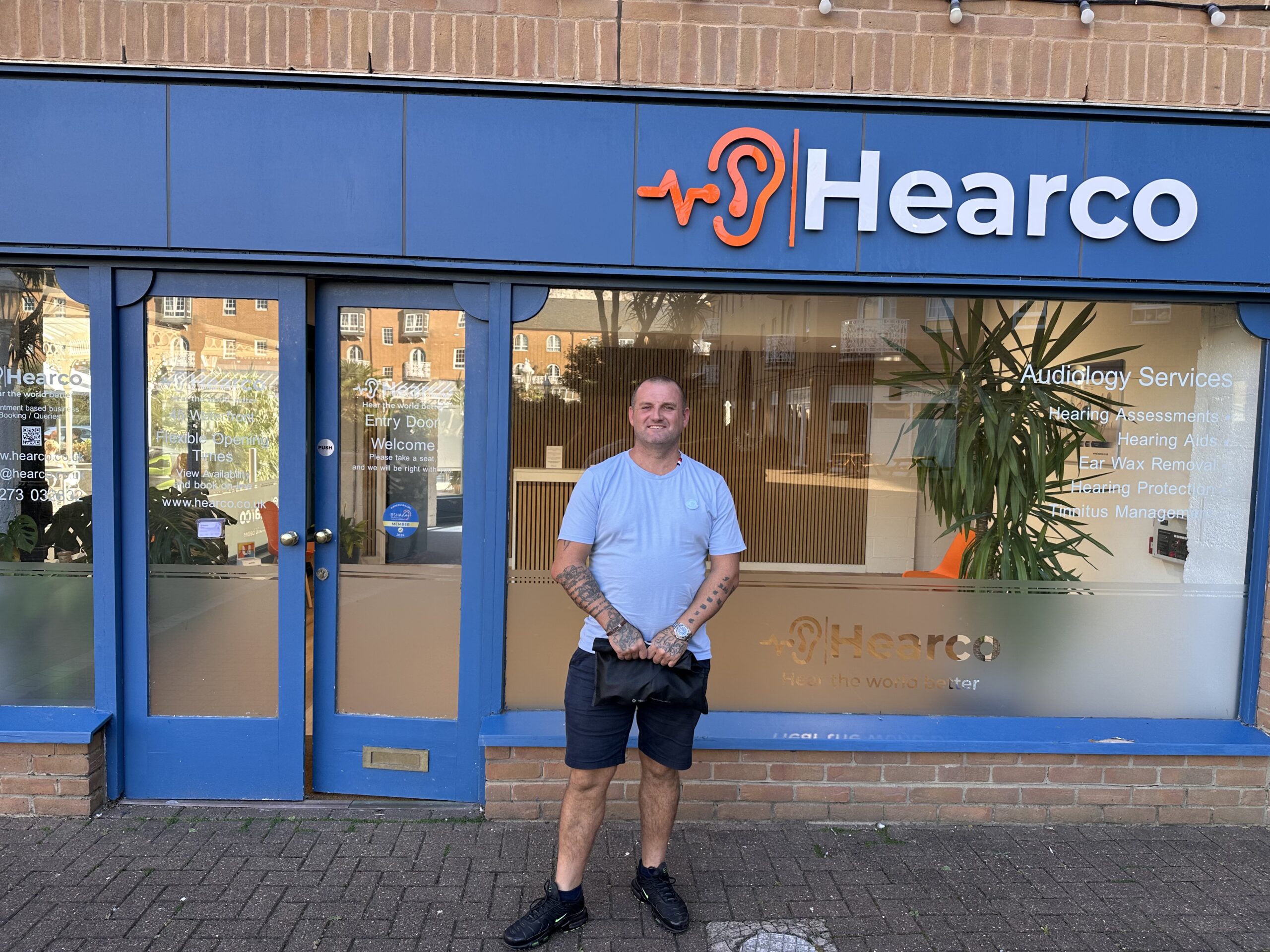
We have a photo of Mr Pieper’s outside the Hearco where he got fitted with his new hearing aids. We thank Mr Pieper for sharing his experience, particularly the details about work. Talking about hearing loss in terms of a job you wanted to do makes the effect on everyday life easier for other veterans and their families to understand.
A huge thank you to Hearco for fitting Mr Pieper with the latest technology hearing aid.

