
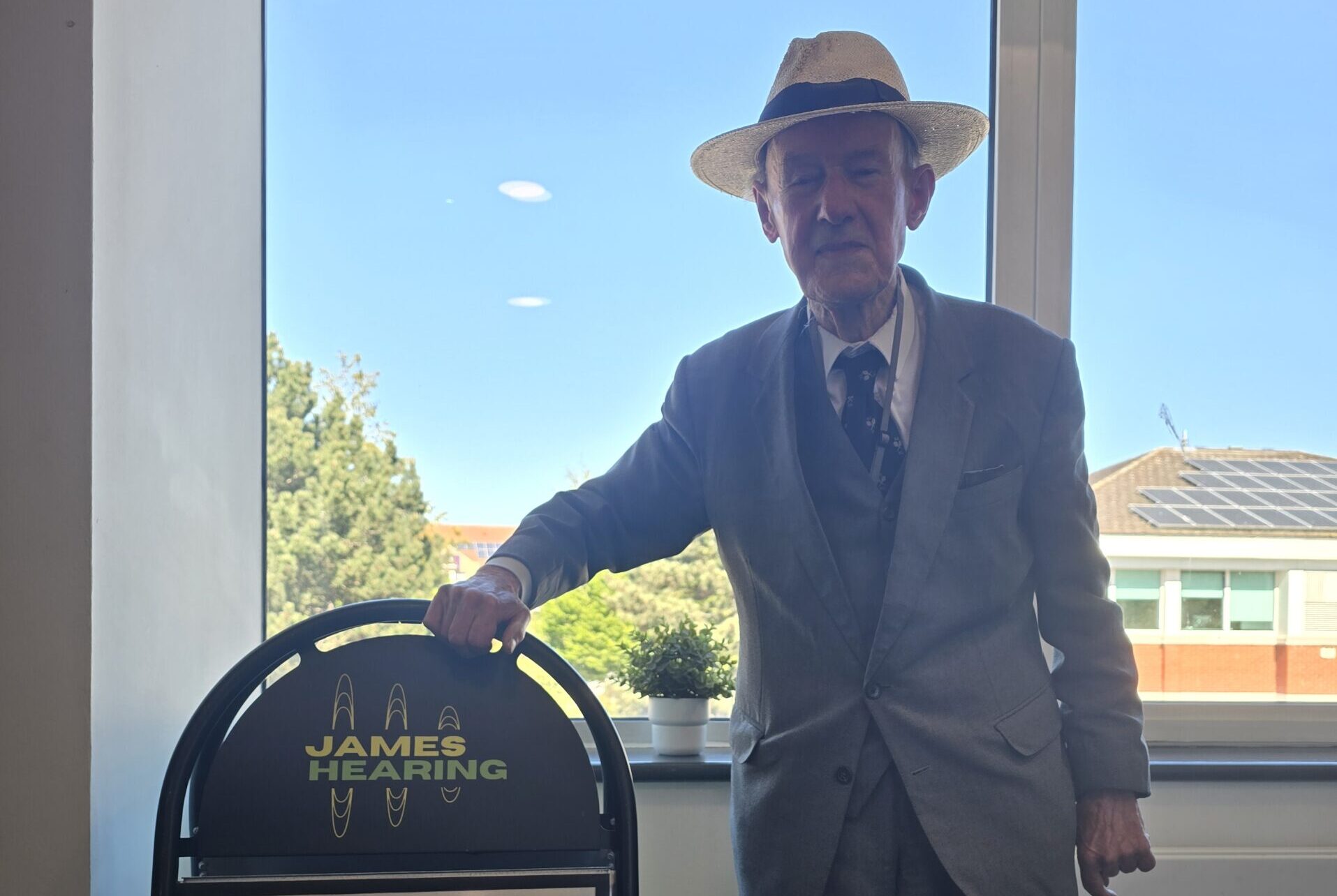
Mr David Stocker served in the Royal Air Force during the early 1950s, a time when hearing protection was not always a priority and exposure to loud environments was part of daily life. Like many veterans, the effects of that service did not fully show themselves straight away. His hearing gradually declined over the years, becoming more noticeable later in life and eventually affecting how he connected with the world around him. What started as a mild hearing difficulty slowly turned into a daily challenge. For him, conversations became harder to follow, especially in environments with background noise, and over time, this quiet loss began to shape his routine, his interactions, and his independence.
Living Alone with Hearing Loss
Hearing loss not only affects what you hear; it also affects how you live. For Mr Stocker, every day moments became increasingly difficult to manage on his own. Watching television required the volume to be turned up high, often still without clarity, and he lost interest in TV because of this. The conversations in groups became frustrating, with words getting lost and meaning slipping away before he could grasp it.
Using the phone was another challenge for him, since even simple calls became something to avoid rather than engage in. Social situations, which once brought connection, had started to feel isolating. When hearing becomes unreliable, confidence often follows. Living alone with these challenges added another layer, where even small interactions required effort and patience.
Why NHS Hearing Aids Were Not Enough
Mr Stocker has already taken steps to address his hearing loss through the NHS. While this provided some level of support, the results were limited. He found that he could manage one-to-one conversations in quiet settings, but real-life situations rarely stay that simple. In environments with background noise or when watching television, clarity remained an issue. The hearing aids did not fully support his day-to-day needs. This is a reality many people face, where basic amplification does not always translate into clear understanding. For Mr Stocker, the gap between hearing and truly listening remained.
Reaching Out for Help
Recognising the growing impact of his hearing loss, Mr Stocker made the decision to seek further support. In his letter, he spoke openly about his situation, explaining that his hearing had worsened and that existing solutions were no longer sufficient. He also highlighted a challenge many face when looking beyond standard care. The cost of private hearing aids was simply not something he could manage. With prices reaching thousands of pounds, access to better hearing support often feels out of reach. His request was not only about hearing better, but it was also about maintaining independence and quality of life.
How UK Veterans Hearing Foundation Stepped In
This is where we, the UK Veterans Hearing Foundation, made a difference. Understanding both the clinical need and the personal impact, the Foundation arranged support tailored to Mr Stocker’s situation. With funding provided by the Bill Brown 1989 Charitable Trust, he was able to access the level of care and technology he needed without the financial burden. His hearing aids were fitted by Waheed Yousef at James Hearing, ensuring he received professional, personalised support throughout the process. This collaboration reflects how UK Veterans Hearing Foundation works, we bring together funding partners, experienced clinicians, and a clear focus on the individual, ensuring veterans receive the care they deserve.

A New Chapter with the Right Hearing Support
With the right hearing support in place, the difference is not only technical but also personal. Clearer conversations mean less repetition and more connection. Everyday interactions begin to feel natural again, rather than something to prepare for or avoid. For Mr Stocker, this change represents more than improved hearing. It restores confidence in social situations, supports independence at home, and allows him to engage more comfortably with the world around him. These are the moments that matter, where better hearing leads to a better quality of life.
More Than Hearing Aids, It Is The Ongoing Support
Support from the UK Veterans Hearing Foundation does not end at the fitting. Ongoing care remains a key part of the journey, ensuring veterans continue to feel supported long after their initial appointment. This includes follow-ups, adjustments, and continued access to professional advice when needed. This includes follow-ups, adjustments, and continued access to professional advice when needed. Knowing that support is available provides reassurance, especially for those who have spent years managing hearing loss on their own. It is not a one-time solution, but a long-term commitment to better hearing.
Mr Stocker shared his experience following his support:
“I am now able to hear people clearly and carry out full conversations. I can also hear the radio without any issues and attend church every Sunday, where I can now comfortably follow the service. I will continue with my aftercare support through James Hearing. I am very grateful to the Foundation and the team for the support they provided.”
Supporting Veterans Across the UK
Mr Stocker’s experience reflects a wider reality faced by many veterans across the UK. Hearing loss linked to service often develops gradually, and the need for support can come much later in life. At the UK Veterans Hearing Foundation, we exist to bridge that gap by removing financial barriers and connecting veterans with expert care. Our Charity helps restore not only hearing, but confidence and independence. Each story is different, but our goal remains the same: ensuring no veteran has to face hearing loss alone.
There is a quiet strength in stories like Mr Stocker’s, a willingness to seek help, to adapt, and to continue moving forward despite challenges. Hearing loss may have shaped parts of his life, but it does not have to define it. A willingness to seek help, to adapt, and to continue moving forward despite challenges. Hearing loss may have shaped parts of his life, but it does not define him. With the right support, small changes lead to meaningful improvements: conversations become easier, daily life feels more manageable, and, most importantly, connection returns in ways that truly matter.
